
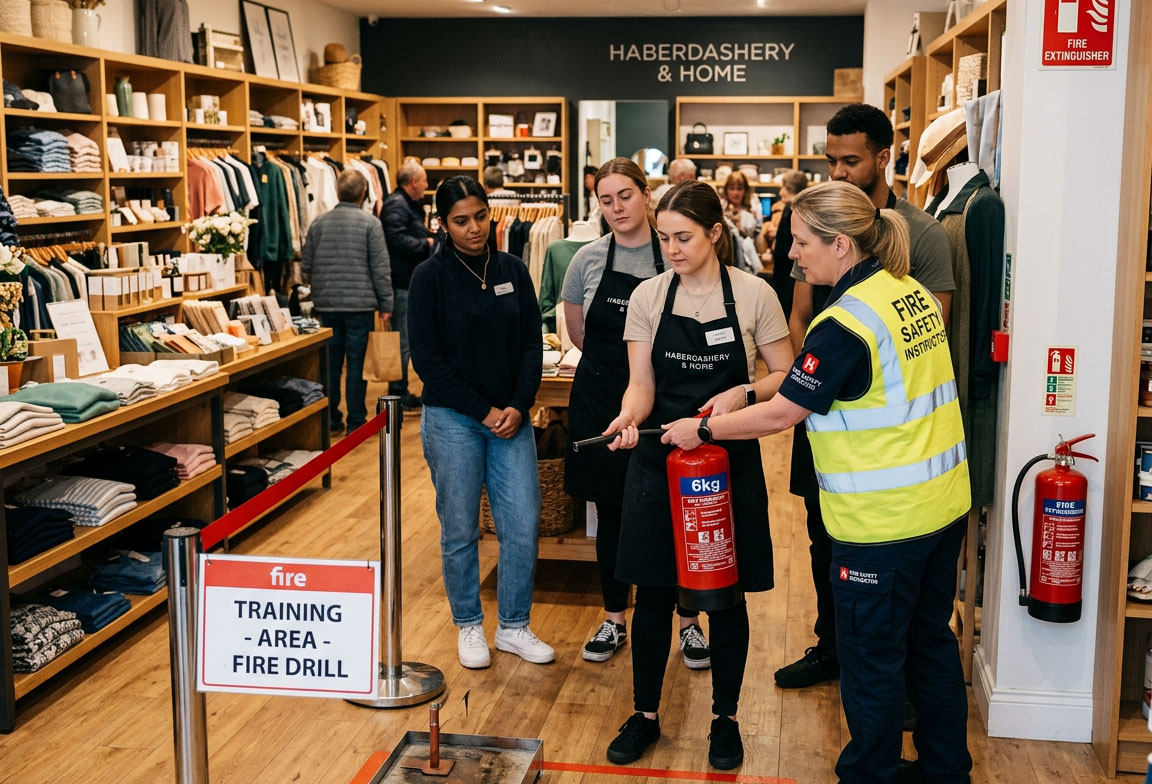
Fire safety is an essential responsibility for every shop owner and manager. Whether it is a small independent retailer or a large commercial premises, shops can contain a range of fire hazards, including electrical equipment, packaging, stock, heating systems and flammable materials.
Taking effective precautions can help protect customers, employees, property and the wider community.
Why Is Fire Safety Important in Shops?
A fire can spread rapidly through a retail environment, particularly where large quantities of combustible stock and packaging are stored. Customers may also be unfamiliar with the layout of the premises, which can make evacuation more difficult during an emergency.
Good fire safety practices help to:
- Protect employees, customers and visitors from injury or loss of life.
- Reduce the likelihood of a fire occurring.
- Limit the potential spread and impact of a fire.
- Ensure escape routes remain accessible.
- Help staff respond quickly and appropriately during an emergency.
- Protect stock, equipment, buildings and business operations.
- Support compliance with applicable fire safety legislation.
Fire safety should therefore be treated as an ongoing responsibility rather than something that is only considered during an inspection.
What Is a Fire Risk Assessment?
A fire risk assessment is a systematic review of a premises to identify potential fire hazards, assess the risks they present and determine what measures are needed to reduce those risks.
For a shop, this should take into account factors such as sources of ignition, combustible materials, electrical equipment, storage arrangements, emergency exits and the people who may be particularly vulnerable in an emergency.
The assessment should also consider how a fire could affect employees, customers, contractors and other visitors.
Key Areas to Consider
A suitable fire risk assessment should consider several important areas.
Sources of ignition: Electrical appliances, damaged wiring, heaters, lighting and other equipment can potentially provide a source of ignition. Regular inspection and maintenance can help reduce these risks.
Combustible materials: Shops often contain significant amounts of packaging, cardboard, paper, textiles and other combustible stock. These materials should be stored safely and kept away from potential ignition sources.
Escape routes: Emergency exits and escape routes should be clearly identified, unobstructed and suitable for the number of people using the premises. Staff should know how to evacuate safely.
Fire detection and warning systems: Appropriate smoke detectors, alarms and other warning systems can provide an early warning and allow people to evacuate quickly.
Fire-fighting equipment: Suitable fire extinguishers and other equipment should be provided where appropriate and maintained properly. Employees should know what the equipment is for and, where relevant, how it should be used safely.
Staff training: Employees should understand the shop’s emergency procedures, including what to do if they discover a fire, how to raise the alarm and where to assemble after evacuation.
Keeping the Assessment Up to Date
A fire risk assessment should not be treated as a one-off document. It should be reviewed regularly and whenever there are significant changes to the premises, activities, staffing, layout or stock.
For example, a shop refurbishment, change of use, new electrical equipment or substantial change in storage arrangements could introduce new hazards that need to be considered.
Regular checks and maintenance are equally important. Fire doors, alarms, emergency lighting, extinguishers and escape routes should be monitored and maintained as appropriate.
Creating a Safer Shopping Environment
Fire safety is ultimately about protecting people. A well-managed fire safety system gives employees confidence that they know what to do in an emergency and helps ensure customers can leave the premises quickly and safely.
For shop owners and managers, carrying out a suitable fire risk assessment and acting on its findings is an important part of responsible business management. It can help identify hazards before they become serious problems, reduce the potential consequences of a fire and contribute to a safer environment for everyone.
Conclusion
Effective fire safety starts with understanding the risks. By carrying out a thorough fire risk assessment, maintaining appropriate fire safety measures, keeping escape routes clear and ensuring staff are properly informed and trained, shops can significantly improve their preparedness for a fire emergency.
Fire safety should be a continuous priority, reviewed regularly and incorporated into the everyday management of the business.